The Milky Way has captivated humanity for millennia, inspiring countless myths and misconceptions that persist even in our modern age of scientific discovery.

From ancient civilizations who saw it as a river of milk spilled across the heavens to contemporary misunderstandings about our galaxy’s structure and composition, the Milky Way remains shrouded in both wonder and confusion. As we gaze up at that luminous band stretching across the night sky, we’re often left wondering what’s real and what’s simply folklore passed down through generations.
This cosmic ribbon of light, visible on clear nights away from city pollution, contains billions of stars, including our own Sun. Yet despite centuries of astronomical study and technological advancement, many people still hold onto outdated beliefs or have fallen prey to common misconceptions about our galactic home. Understanding the truth about the Milky Way not only enriches our appreciation of the universe but also helps us grasp our place within this vast cosmic neighborhood.
🌌 The Ancient Myths That Shaped Our Understanding
Throughout human history, cultures across the globe developed fascinating explanations for the milky band of light visible in the night sky. The Greeks believed it was milk from the goddess Hera’s breast, which gave us the name “Milky Way” or “Galaxias Kyklos” meaning “milky circle.” Norse mythology described it as the path souls took to reach Valhalla, while ancient Egyptians saw it as a pool of cow’s milk placed in the sky by the goddess Bat.
In Chinese astronomy, the Milky Way represented the “Silver River” that separated two lovers, commemorated in the annual Qixi Festival. Native American tribes had equally poetic interpretations, with some viewing it as a path of white ashes or a road for spirits to travel to the afterlife. These stories, while beautiful and culturally significant, reflect humanity’s need to explain the inexplicable through narrative and mythology.
The scientific revolution gradually replaced these myths with empirical observation. Galileo Galilei’s telescope observations in 1610 revealed that the Milky Way wasn’t a cloudy substance but countless individual stars too distant to distinguish with the naked eye. This discovery marked the beginning of our journey toward understanding the true nature of our galaxy.
Debunking Common Misconceptions About Galactic Structure
One of the most persistent myths about the Milky Way is that we can see the entire galaxy from Earth. In reality, we’re located within the galactic disk, approximately 26,000 light-years from the galactic center. This positioning means we can only see a cross-section of our galaxy as that characteristic band of light across the sky. It’s like trying to understand the layout of a forest while standing among the trees – we simply don’t have the exterior perspective necessary to see the full picture directly.
Another widespread misconception concerns the Milky Way’s appearance. Many people assume the stunning spiral galaxy images they’ve seen represent what our galaxy looks like from our vantage point. Those spectacular photographs are actually other galaxies or artistic reconstructions based on scientific data. We cannot photograph the Milky Way from outside because we’re embedded within it, much like you cannot take a photo of the outside of your house while sitting in your living room.
The belief that the Milky Way is static and unchanging is equally false. Our galaxy is in constant motion, with stars orbiting the galactic center at various speeds depending on their distance. The Sun, along with our entire solar system, completes one orbit around the galactic center approximately every 225-250 million years – a period sometimes called a “cosmic year.” During Earth’s history, our planet has completed roughly 20 such orbits since its formation.
⭐ The Truth About Stars and Stellar Density
Many people believe the Milky Way’s bright band contains all or most of the galaxy’s stars. This is a significant misunderstanding of galactic structure. The Milky Way contains an estimated 100 to 400 billion stars, and what we see as the luminous band is merely the densest concentration of stars along our line of sight through the galactic plane. Countless stars exist above and below this plane, distributed throughout the galaxy’s structure including the halo and bulge regions.
There’s also a common myth that stars in the Milky Way are densely packed, almost touching each other. In reality, the distances between stars are incomprehensibly vast. The nearest star to our Sun, Proxima Centauri, is approximately 4.24 light-years away. To put this in perspective, if the Sun were the size of a golf ball, Proxima Centauri would be another golf ball located roughly 764 miles away. The emptiness of space is one of its most defining characteristics.
This vast spacing means that when our Milky Way collides with the Andromeda Galaxy in approximately 4.5 billion years, the likelihood of any two stars actually colliding is astronomically small. The galaxies will merge, but individual stars will pass by each other like ships in an enormous cosmic ocean, separated by distances that dwarf their physical sizes.
Black Holes: Fear, Fiction, and Facts
Perhaps no astronomical feature generates more myths and misconceptions than black holes, particularly Sagittarius A*, the supermassive black hole at the Milky Way’s center. Popular culture has portrayed black holes as cosmic vacuum cleaners, indiscriminately sucking up everything in their vicinity. This dramatic characterization, while making for compelling science fiction, bears little resemblance to reality.
Black holes only significantly affect objects that venture extremely close to their event horizon – the point of no return beyond which nothing can escape. Sagittarius A*, despite containing approximately 4 million times the mass of our Sun, poses no threat to Earth or even to stars relatively close to the galactic center. Gravity follows predictable laws, and objects can safely orbit black holes just as planets orbit stars, provided they maintain sufficient distance.
Another myth suggests that black holes are empty voids or holes in space. In truth, black holes contain tremendous amounts of matter compressed into an incredibly small volume. This extreme density creates gravitational fields so powerful that they warp spacetime itself. The “black” in black hole refers to the fact that not even light can escape once it crosses the event horizon, making them invisible to direct observation. We detect them through their gravitational effects on surrounding matter and radiation.
🔭 Exploring the Galactic Center Mysteries
The center of the Milky Way has long been a source of speculation and myth. Some have claimed it’s a portal to other dimensions or harbors alien civilizations using the black hole’s energy. While these ideas make for entertaining speculation, the reality is both more mundane and more fascinating. The galactic center is a region of intense stellar density, powerful magnetic fields, and high-energy radiation that would make it extremely hostile to life as we know it.
Recent observations have revealed surprising features near Sagittarius A*. Astronomers have discovered stars orbiting the supermassive black hole at incredible velocities, some reaching speeds of up to 5,000 kilometers per second. These observations have allowed scientists to test Einstein’s theory of general relativity under extreme conditions and have confirmed predictions about how gravity behaves near such massive objects.
The myth that we cannot observe the galactic center because it’s too far away has been thoroughly debunked by modern astronomy. While visible light cannot penetrate the dense clouds of dust between us and the galactic core, other wavelengths of electromagnetic radiation – particularly infrared, radio, and X-rays – pass through relatively unimpeded. This multi-wavelength astronomy has opened windows into the galactic center that visible light alone could never provide.
The Spiral Arms Enigma
The Milky Way’s spiral structure has been subject to considerable confusion and myth-making. For decades, determining the exact number and configuration of spiral arms proved challenging because of our interior vantage point. Early estimates ranged from two to four major arms, leading to conflicting models and public confusion about our galaxy’s basic structure.
Modern research combining radio telescope data, infrared observations, and stellar distance measurements has revealed that the Milky Way is a barred spiral galaxy with two major spiral arms (Perseus and Scutum-Centaurus) and several minor arms or spurs. Our solar system resides in a minor arm called the Orion Spur, located between the larger Perseus and Sagittarius arms. This placement in a relatively quiet galactic neighborhood may have been beneficial for the development of life on Earth.
Contrary to popular belief, spiral arms are not rigid structures that rotate like the blades of a pinwheel. They are actually density waves – regions where stars, gas, and dust temporarily accumulate as they orbit the galactic center at different speeds. Individual stars move through the spiral arms during their orbits, spending some time within an arm and other periods between them. This dynamic nature makes spiral arms fascinating examples of cosmic organization arising from gravitational interactions.
🌠 Dark Matter and the Invisible Galaxy
One of the most revolutionary discoveries in modern astronomy is that the matter we can see – stars, gas, dust, and planets – comprises only a small fraction of the Milky Way’s total mass. The rest consists of mysterious dark matter, an invisible substance that neither emits nor absorbs light but reveals its presence through gravitational effects. This finding has spawned numerous myths and misconceptions.
Some people mistakenly believe dark matter is simply ordinary matter that’s too dim to detect, perhaps failed stars or planets scattered throughout space. However, astronomical surveys have accounted for such objects, and they fall far short of explaining the missing mass. Dark matter appears to be an entirely different type of matter, possibly composed of exotic particles that interact with ordinary matter primarily through gravity.
The myth that dark matter is a made-up concept invented to fix problems in cosmological theories reflects misunderstanding of the scientific method. Dark matter was proposed to explain observed phenomena – such as the rotation speeds of galaxies and the motions of galaxy clusters – that couldn’t be accounted for by visible matter alone. Multiple independent lines of evidence from gravitational lensing, cosmic microwave background radiation, and large-scale structure formation all point to dark matter’s existence. Scientists are working to identify its exact nature, but its gravitational effects are well-documented and measurable.
Life in the Milky Way: Separating Hope from Hype
The question of whether life exists elsewhere in the Milky Way has generated countless myths, from ancient beliefs in celestial beings to modern UFO conspiracies. While the search for extraterrestrial life remains one of astronomy’s most compelling endeavors, it’s important to separate scientific inquiry from wishful thinking and unfounded claims.
Recent discoveries of thousands of exoplanets orbiting other stars have revolutionized our understanding of planetary systems. We now know that planets are common, and many reside in their star’s habitable zone where liquid water could exist on their surfaces. However, the leap from “habitable planets exist” to “intelligent civilizations are common” involves many uncertain factors. The Drake Equation attempts to estimate the number of communicative civilizations in our galaxy, but many of its variables remain highly speculative.
The myth that vast distances make interstellar communication or travel impossible has some basis in current technological limitations but shouldn’t be mistaken for an absolute barrier. While the laws of physics as we understand them present formidable challenges, they don’t necessarily prohibit slower-than-light interstellar travel or long-range communication. The real question is whether any civilization would invest the enormous resources required for such endeavors. The absence of confirmed extraterrestrial contact might reflect these practical limitations rather than the absence of other civilizations.
🚀 Future Fate and Cosmic Collisions
Myths about the Milky Way’s future range from apocalyptic scenarios of imminent destruction to assumptions of eternal unchanging existence. The reality lies between these extremes. As mentioned earlier, the Milky Way is on a collision course with the Andromeda Galaxy, an event that will fundamentally reshape both galaxies over billions of years.
Some people fear this galactic collision will destroy Earth or disrupt our solar system catastrophically. In truth, the merger will likely have minimal direct impact on individual star systems due to the vast distances between stars. However, the gravitational interactions will dramatically alter both galaxies’ structures, potentially forming a single elliptical galaxy astronomers have nicknamed “Milkomeda.” Our solar system might be flung into a different region of the merged galaxy, giving future astronomers (if humans still exist) a very different night sky to observe.
The myth that the universe and the Milky Way will exist forever in their current forms contradicts our understanding of cosmology. Eventually, on timescales of trillions of years, star formation will cease as the galaxy exhausts its supply of hydrogen gas. Existing stars will burn out, leaving behind white dwarfs, neutron stars, and black holes. The universe itself appears headed toward a state sometimes called “heat death” where all usable energy has been dissipated. While these timescales are almost incomprehensibly long, they remind us that even galaxies are temporary structures in the cosmic timeline.
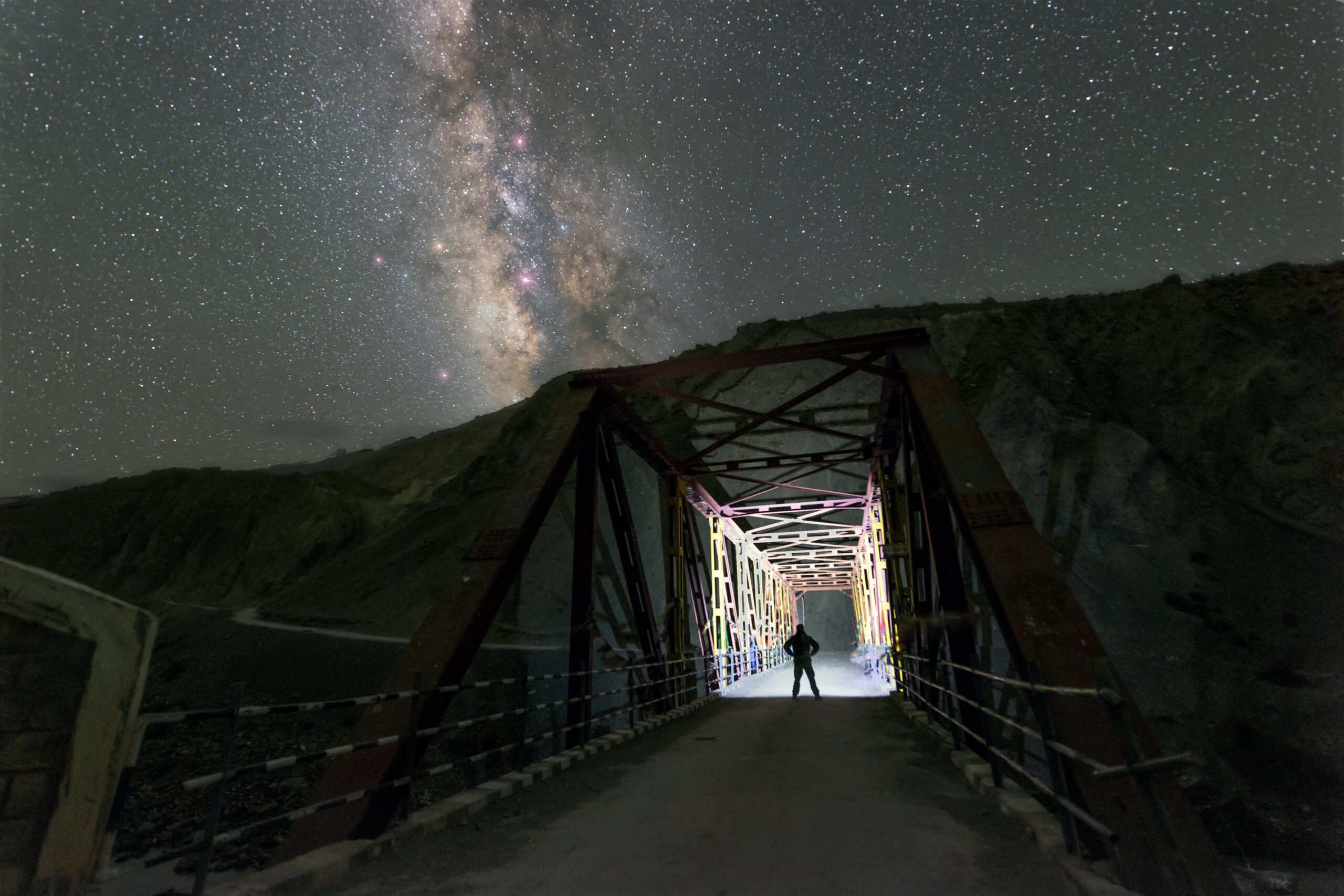
Embracing Scientific Wonder Over Mythology
The journey from ancient myths to modern understanding illustrates humanity’s evolving relationship with the cosmos. While the poetic explanations of our ancestors held cultural and spiritual significance, the scientific reality of the Milky Way offers its own profound sense of wonder that requires no embellishment. We live in a vast spiral galaxy containing hundreds of billions of stars, many likely hosting their own planetary systems. We orbit an unremarkable yellow star in a minor spiral arm, yet this seemingly insignificant location provided the stable environment necessary for complex life to evolve.
Debunking myths about the Milky Way doesn’t diminish its majesty; rather, it deepens our appreciation by replacing fantasy with verifiable knowledge. Each discovery opens new questions and reveals layers of complexity that our ancestors could never have imagined. The Milky Way isn’t a river of milk or a path for spirits, but it is our cosmic home, a dynamic system of stars, gas, dust, and mysterious dark matter bound together by gravity across distances that challenge human comprehension.
As we continue exploring our galaxy with ever more sophisticated instruments and techniques, we can expect many current assumptions to be refined or overturned. This self-correcting nature of science ensures that our understanding grows closer to truth over time, even if that truth proves more complex than we initially imagined. The myths we’ve debunked here represent just a fraction of the misconceptions surrounding our galaxy, but addressing them helps build a foundation of accurate knowledge upon which future understanding can be constructed.
The Milky Way’s mysteries continue to inspire scientists and stargazers alike, not because of fabricated myths but because of the genuine enigmas that remain. Questions about dark matter’s nature, the prevalence of life, the mechanisms of star formation, and countless other topics ensure that our galaxy will remain a subject of intense study and fascination for generations to come. By embracing scientific inquiry over mythology, we honor both the universe’s genuine complexity and humanity’s capacity to understand it through careful observation, experimentation, and reasoning.